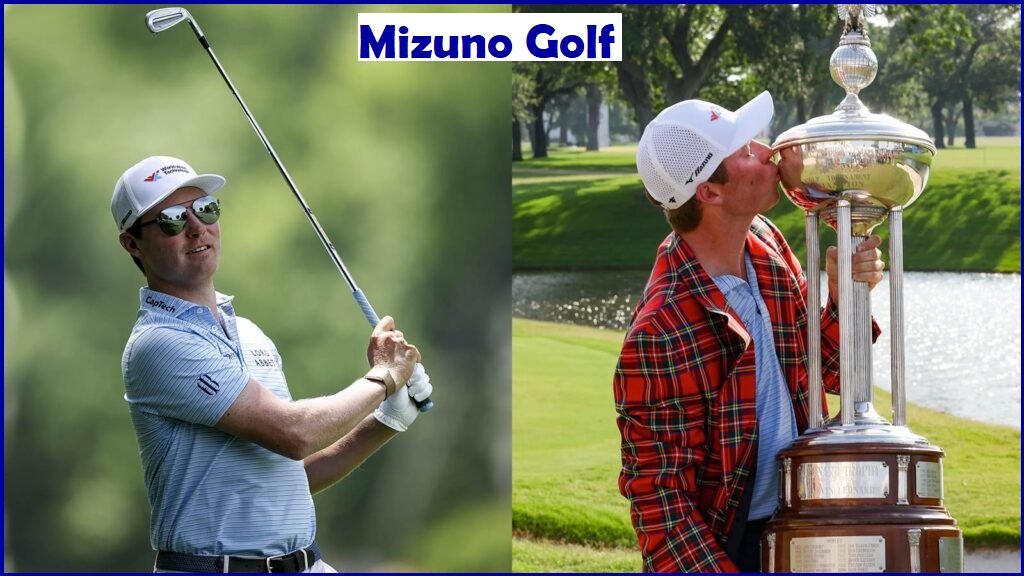
Introduction to Mizuno Golf
Mizuno Golf is a famous brand within the golf equipment enterprise, in particular diagnosed for its golf irons, forging technology, precision manufacturing, and emphasis on experience. Mizuno’s involvement in golf equipment dates back to 1933, when the enterprise started out manufacturing golf merchandise under the Starline name. The company later gained strong popularity the world over, specifically for its solid irons.
Today, Mizuno Golf offers a wide range of golf equipment, along with irons, drivers, fairway woods, hybrids, wedges and putters, alongside golfing baggage, shoes, gloves, garb and other accessories.
For many golfers, the Mizuno name is strongly related to the feel and consistency of cast golf clubs. However, the company also develops contemporary technologies designed to offer speed, forgiveness, balance and distance.
Mizuno Golf History
Mizuno’s records started out in Japan in 1906, when Rihachi Mizuno and his younger brother Rizo opened a shop selling wearing goods. The organisation initially focused on baseball device earlier than increasing into different sports activities. Mizuno started producing golf equipment in 1933.
The company’s golf club production evolved notably over the subsequent decades. Mizuno’s forging know-how became specifically crucial to its identity. According to Mizuno, its irons were forged in Hiroshima, Japan, considering the fact that 1968.
During the 1990s, computer-aided design and casting became increasingly commonplace inside the golfing industry. Mizuno persevered, making an investment in its forging approaches and developed its Grain Flow Forging approach, helping set up the logo’s reputation for unique solid irons.
Mizuno’s records consist of many recognizable iron lines, consisting of MP, JPX, and Mizuno Pro. Its respectable iron timeline lists generations extending from older models along with TP and MP irons via present-day JPX and Mizuno Pro products.
What Makes Mizuno Golf Clubs Different?
One of the largest motives golfers do not forget Mizuno Golf is the business enterprise’s emphasis on feel and precision.
Grain Flow Forging
Grain Flow Forging is one of Mizuno’s best-known manufacturing technologies. The organisation says this process has been a defining feature of its forged irons due to the fact that production commenced in Hiroshima in 1968.
Forging involves forming metal under controlled pressure in place of generating the club head totally via a traditional casting method. The purpose is to achieve a specific clubhead shape and a specific mixture of feel, feedback, and performance.
Mizuno’s technique has traditionally appealed specifically to golfers who cost comments at effect and specific management.
Precision and Consistency
Mizuno’s historic technique of production has located good sized emphasis on consistency. Its legitimate history explains that earlier forging methods could require extensive hand grinding, whilst Mizuno developed a extra specific forging process meant to enhance consistency among membership heads.
This manufacturing philosophy stays an essential part of the brand’s identity.
Mizuno Golf Irons
Mizuno is perhaps most strongly associated with golf irons. Its product history includes several generations of MP, JPX and Mizuno Pro irons.
The organization’s current lineup includes one-of-a-kind designs meant to address specific golfer requirements. Some models emphasize a compact, player-oriented profile, whilst others consciousness extra heavily on distance and forgiveness.
Mizuno Pro Irons
The Mizuno Pro circle of relatives represents the company’s premium player-centered iron range. Previous generations have included Mizuno Pro 221, 223 and 225, each designed with a unique combination of form, speed and playability.
Mizuno’s modern-day official lineup also includes more modern Mizuno Pro models, demonstrating that the enterprise maintains to broaden the range as opposed to relying on its historical designs.
JPX Irons
The JPX family is another critical part of Mizuno Golf. JPX irons have been regarded in multiple generations, inclusive of JPX900, JPX919, JPX921, JPX923 and JPX925 models.
The JPX family includes one-of-a-kind configurations designed for exceptional levels of golfer and overall performance priorities.
For example, Mizuno’s JPX925 Hot Metal variety includes standard, Hot Metal Pro, and Hot Metal HL variations. The authentic specs display differences in loft, offset, and club configuration among these models.
Mizuno Golf Drivers
Although Mizuno has a mainly strong popularity for irons, the company also produces drivers and other metalwoods.
An essential latest development is the JPX ONE Driver, delivered with NANOALLOY™ face generation. Mizuno describes it as the sector’s first driving force offering a NANOALLOY™ face.
The JPX ONE Driver is designed around ball pace, stability, and consistency throughout the face. Mizuno says the era makes use of microscopic polymer dispersion in the face structure to persuade its elasticity at some stage in effect.
The driving force additionally incorporates functions consisting of a titanium solid face, composite crown, Ti811 frame, an adjustable Quick Switch adaptor, and rear weighting.
This shows how Mizuno’s present-day golf technology extends past traditional cast irons.
Mizuno Golf Wedges
Wedges are every other critical part of the Mizuno Golf lineup. Wedges are used for method shots, pitching, bunker play, and putting across the course.
Mizuno’s current equipment variety includes the T-Series wedge family, including T24 and newer T-Series models. The respectable Mizuno website also highlights T1 and T3 wedges in its current product presentation.
When selecting a Mizuno wedge, golfers must take into account:
- Loft
- Bounce
- Sole design
- Shaft
- Swing kind
- Typical direction situations
- Distance gaps between wedges
Choosing wedges based simply on appearance or emblem is not perfect. Loft spacing and bounce are vital due to the fact that they assist in creating useful distance gaps at some stage in the short-game setup.
Mizuno Golf Putters
Mizuno also produces putters, including the M.CRAFT family. The enterprise’s modern-day website highlights the M.CRAFT X putter range and other M.CRAFT products.
A putter has to be decided on in keeping with factors such as stroke type, head shape, alignment possibilities, balance, and feel.
Because fit is pretty personal, trying out specific putter designs may be more beneficial than selecting a version simply because it’s miles popular.
Important Mizuno Golf Product Categories
| Mizuno Golf Category | Examples/Range | Main Purpose |
|---|---|---|
| Irons | Mizuno Pro, JPX | Approach and full shots |
| Drivers | JPX ONE and other Mizuno drivers | Tee shots and distance |
| Fairway Woods | JPX and other wood ranges | Long shots from tee or fairway |
| Hybrids | JPX and other hybrid models | Easier long-distance shots |
| Wedges | T-Series | Short game and approach shots |
| Putters | M.CRAFT | Putting |
| Golf Balls | Mizuno golf balls | Ball performance |
| Bags | Mizuno golf bags | Carrying golf equipment |
| Footwear | Mizuno golf shoes | Traction and comfort |
| Gloves | Mizuno golf gloves | Grip and hand protection |
Mizuno’s reputable shop lists these important clubs and accessory categories.
Mizuno Golf Iron Timeline
Mizuno has produced a massive variety of iron models over many years. The following table offers examples instead of a whole list.
| Period/Generation | Example Mizuno Iron |
|---|---|
| Early 1990s | TP-10, TP-11 |
| Mid-1990s | MP-14 |
| Early 2000s | MP-33, MP-30 |
| Late 2000s | MP-62, MP-67 |
| 2010s | MP-4, MP-5, JPX900 |
| Late 2010s | JPX919 |
| Early 2020s | JPX921, Mizuno Pro 221/223/225 |
| 2020s | JPX923, JPX925 and newer Mizuno Pro models |
The ancient version facts is based totally on Mizuno’s reputable iron timeline.
Who Should Buy Mizuno Golf Clubs?
Mizuno Golf clubs can be suitable for many styles of golfers, but the proper model relies upon capacity, swing traits, and overall performance needs.
Better Players
Golfers with consistent ball striking may recognize compact Mizuno Pro or different player-oriented iron designs because this golf equipment can provide robust feedback and workability.
Mid-Handicap Golfers
Mid-handicap golfers may also decide on irons that offer stability and forgiveness. JPX models may be well worth thinking about due to the fact that the variety carries distinctive configurations in place of a unmarried layout for every participant.
Higher-Handicap Golfers
Higher-handicap golfers typically benefit from forgiveness, release help, and a design that gives confidence. Within Mizuno’s lineup, golfers have to look for models designed around these characteristics in place of mechanically deciding on a compact player’s iron.
The most crucial factor is that Mizuno does not have one established “high-quality” club for every golfer. A consultation can assist in determining which head, loft, and shaft combination works first-class.
How to Choose Mizuno Golf Clubs
Before purchasing a Mizuno Golf system, bear in mind these factors:
1. Know Your Handicap
Your handicap can offer a useful starting point, even though it ought not to be the only component.
2. Check Your Swing Speed
Driver and iron shaft selection can be stimulated by way of swing velocity and pace. A professional fitting can provide extra useful information than selecting a shaft primarily based most effective on a well-known chart.
3. Compare Clubhead Designs
Mizuno gives one-of-a-kind iron profiles. Compare blade, cavity, and more forgiving designs in step with your capacity and choices.
4. Check Loft and Distance Gaps
Modern irons will have unique loft structures. The JPX925 Hot Metal, for instance, has a 28-degree 7-iron, while its Hot Metal HL version has a 31-degree 7-iron in step with Mizuno’s posted specs.
This demonstrates why evaluating lofts is vital while building a whole set.
5. Get Professionally Fitted
An expert club fitting can help decide:
- Shaft flex
- Shaft weight
- Lie angle
- Club period
- Loft
- Grip length
- Head layout
- Launch characteristics
A fitting is particularly valuable when buying a complete set in preference to changing one club.
Mizuno Golf vs Other Golf Brands
Mizuno competes with many of the most important club producers. Rather than claiming one emblem is universally better, golfers have to examine gadgets in keeping with their own requirements.
Mizuno has a especially sturdy identity around cast irons, feel, and precision. At the same time, its contemporary product development consists of technology targeted on velocity and forgiveness.
Its JPX ONE Driver, for example, demonstrates the corporation’s investment in the present-day driver-face era along with its conventional expertise in irons.
Are Mizuno Golf Clubs Good for Beginners?
Mizuno Golf clubs may be suitable for novices, but novices should pay particular attention to club layout rather than deciding on a version totally because of the Mizuno name.
A novice generally benefits from clubs which are cushty to swing, offer sufficient forgiveness, and assist produce consistent release. Becoming a professional can make it simpler to perceive the perfect specs.
Beginners have to avoid shopping for a hard-to-hit player’s iron, certainly because it seems attractive. The fine gadget is the gadget that matches the golfer’s modern potential and allows room for improvement.
Mizuno Golf and Professional Golf
Mizuno has a protracted records with expert golfers. One of the most famous examples is Sir Nick Faldo, who won six important championships with Mizuno irons in his bag. Mizuno’s reliable record highlights Faldo’s long relationship with the brand.
The business enterprise’s professional history has helped make stronger its popularity among golfers who value device overall performance and craftsmanship.
However, professional use ought not to automatically determine what an amateur should purchase. Tour gamers have surprisingly evolved swings and are regularly geared up with highly specific systems.
Mizuno Golf Technology Today
Mizuno maintains to combine traditional production strategies with more modern technology.
Its current product development includes forged irons, modern motive force generation, and superior materials. The JPX ONE Driver’s NANOALLOY™ face is one example of this method.
The enterprise has also mentioned new manufacturing techniques supposed to reduce cloth use, waste, and greenhouse-gas emissions in golf club manufacturing.
This combination of conventional craftsmanship and modern-day engineering is a vital part of Mizuno’s modern golf identity.
Frequently Asked Questions About Mizuno Golf
Is Mizuno Golf an awesome logo?
Mizuno is an established golf-equipment manufacturer with a long history of producing golf equipment. It is specifically recognized for cast irons and its emphasis on experience and precision.
What is Mizuno Golf nice regarded for?
Mizuno is particularly well known for its solid irons, the Grain Flow Forging era, and the feel related to its solid clubs.
Are Mizuno irons cast?
Many Mizuno irons use the employer’s forging technology, despite the fact that the precise process depends on the model. Buyers must check the specs of the specific iron they’re thinking about.
What are Mizuno JPX irons?
JPX is one of Mizuno’s most important iron lines. The range has spanned generations, consisting of JPX900, JPX919, JPX921, JPX923, and JPX925.
What is Mizuno Pro?
Mizuno Pro is a top-rated Mizuno iron family focused on superior engineering and player-oriented designs. Earlier generations included the Mizuno Pro 221, 223, and 225.
What is the Mizuno JPX ONE Driver?
The JPX ONE Driver is a modern-day Mizuno driver featuring NANOALLOY™ face technology. Mizuno describes the technology as designed to boom ball pace and consistency throughout a much broader region of the face.
Should I get geared up for Mizuno Golf equipment?
Yes. A professional fitting can assist in determining the clubhead, shaft, loft, lie, and other specifications that first-rate help your swing.
Final Thoughts on Mizuno Golf
Mizuno Golf has built its recognition over many a long time through a combination of Japanese production background, forging know-how, precision engineering, and non-stop product development. From its early clubs in the Nineteen Thirties to fashionable JPX and Mizuno Pro irons and technologies, which includes the JPX ONE NANOALLOY™ driver face, the company has continued to evolve.
For golfers thinking about the Mizuno system, the most important choice isn’t actually deciding on the most pricey or most well-known version. Instead, golfers should take into account their handicap, swing velocity, ball-placing capability, preferred forgiveness, favored feel, and membership-becoming measurements.
Whether you are inquisitive about Mizuno irons, drivers, wedges, hybrids or putters, evaluating specifications and testing clubs permit you to build a setup that suits your sport.