Professional golf has valuable traditions, commercially attractive audiences and some of the world’s most recognisable athletes. Yet the PGA TOUR still faces a challenge familiar to many established sports properties: how to turn occasional spectators into committed, year-round fans without weakening the qualities that made the competition successful.
The clearest model may be the National Football League. The NFL has built an entertainment ecosystem in which games are only one part of the product. Its calendar, media partnerships, star-led narratives and digital services keep audiences engaged throughout the year. The PGA Tour has already begun adopting elements of this approach, particularly under chief executive Brian Rolapp, who joined after 22 years at the NFL and will succeed Jay Monahan as commissioner on 1 January 2027.
Make Every Tournament Easier to Understand
One of the NFL’s strengths is structural clarity. Fans understand the regular season, divisional races, playoffs and Super Bowl. Every game feeds into a recognisable journey with steadily increasing consequences.
Golf’s calendar can feel less coherent. There are multiple tours, four independently operated major championships, changing tournament names and events with different eligibility rules. Casual viewers may enjoy individual rounds without understanding how they contribute to the wider season.
The PGA Tour’s planned 2028 competitive overhaul directly addresses this weakness. A new two-series model will introduce the PGA Tour Championship Series and PGA Tour Challenger Series, creating clearer competitive levels and a more recognisable route towards the postseason. The objective is to bring leading players together more frequently, clarify what is at stake and ensure each tournament serves a specific purpose.
That structure could make the sport easier to discuss across television, social media and DraftKings’ coverage of NFL odds, where clearly defined weekly consequences already encourage constant conversation. Golf does not need to imitate betting-led engagement, but it can learn from the way the NFL makes each fixture feel connected to a larger story.
Build Stars, Rivalries and Personal Narratives
The NFL markets teams, but it also promotes quarterbacks, coaches, rookies and rivalries. Fans are given reasons to care before a game begins. Golf traditionally expects individual performances to generate their own narratives, which can leave less familiar players struggling for attention.
The PGA Tour should invest more heavily in personality-led storytelling, including behind-the-scenes documentaries, player microphones, practice-ground access and short videos designed for mobile viewing. Its collaboration between PGA TOUR Studios and NFL Films around THE PLAYERS Championship is an important indication of this direction, promising close access and mic’d-up insights from competitors at TPC Sawgrass.
The lesson is not to manufacture conflict. It is to show audiences the preparation, pressure and relationships behind tournament golf. When viewers understand a player’s personality and journey, an ordinary Thursday round can acquire meaning.
Treat Distribution as a Growth Tool
The NFL has protected the reach of traditional broadcasting while expanding through streaming, direct-to-consumer services and digital highlights. Rolapp helped oversee the league’s agreements with Amazon, CBS, ESPN/ABC, FOX and NBC, as well as the movement of NFL Sunday Ticket to YouTube and the launch of NFL+.
Golf needs a similarly coordinated approach. A tournament unfolds across several days and dozens of simultaneous player groups, so television coverage alone cannot satisfy every fan. Personalised feeds, featured groups, condensed rounds, individual-player alerts and searchable highlights can make that complexity an advantage.
The Tour has recruited another experienced NFL executive, Will Deng, as senior vice-president of media strategy. His background includes work on the NFL’s early digital broadcasts and its transition towards major streaming partnerships. He will help prepare the Tour for media-rights negotiations as its current US agreements approach their conclusion after 2030.
Create Content for Younger Audiences
The NFL surrounds its main competition with fantasy products, gaming, creator collaborations and short-form clips. Golf has historically depended more heavily on committed viewers willing to watch lengthy broadcasts.
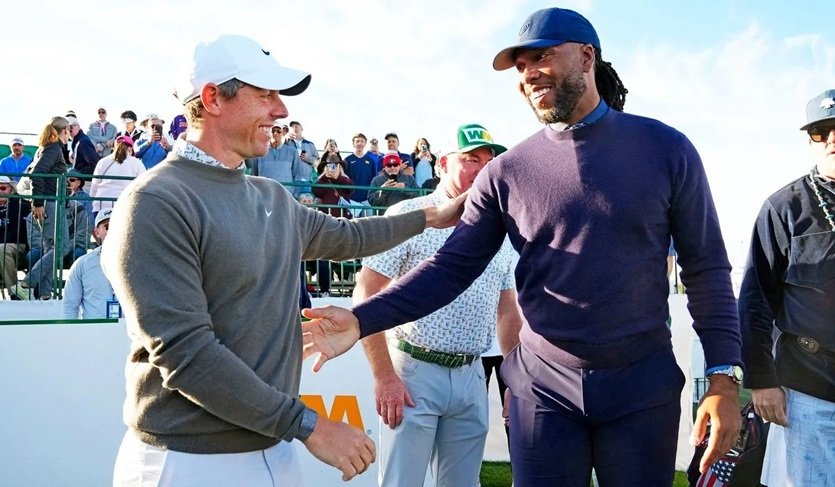
The Creator Classic demonstrates how that is changing. The competition has brought digital golf personalities onto recognised Tour venues and distributed coverage through YouTube, ESPN+, Golf Channel and free ad-supported streaming services. Its format is shorter, personality-driven and designed to reach viewers who may know online creators better than professional golfers.
This type of initiative should complement rather than replace conventional tournaments. Creators can explain technique, introduce courses and make professional golf feel accessible, while the principal Tour retains its competitive authority.
Convert Events into Experiences
NFL games are packaged as major social occasions, with entertainment, hospitality, merchandise and sponsor activation surrounding the action. Golf tournaments have similar potential because spectators spend several hours at the venue and can move around the course.
The Tour can improve marketability through fan zones, live music, interactive practice areas, better mobile navigation and more accessible player engagement. It can also hold more tournaments near large population centres. Rolapp’s initial proposals included opening the season with a high-profile event at an iconic western venue and taking more tournaments to major markets with strong potential demand.
Preserve Scarcity and Consequence
The final NFL lesson is that size alone does not create value. A limited schedule makes individual games important. Golf risks reducing urgency when elite players appear inconsistently or when tournaments seem interchangeable.
The PGA Tour’s Signature Events have started concentrating stronger fields, and their 2026 series reportedly delivered a 10% year-on-year rise in viewership. Full-field tournament audiences increased by 27%, while Golf Channel’s four-day average grew by 28%.
The Tour should continue creating stronger fields and clearer consequences while protecting pathways for emerging players. Promotion, relegation and a dramatic postseason could provide that balance.
Ultimately, the PGA Tour does not need to become the NFL. It needs to adopt the NFL’s discipline: a comprehensible season, recognisable stars, broad distribution and continuous storytelling. Its current reforms suggest that process is underway. The next test is whether those changes can make professional golf simpler to follow, easier to access and more emotionally compelling for a new generation.